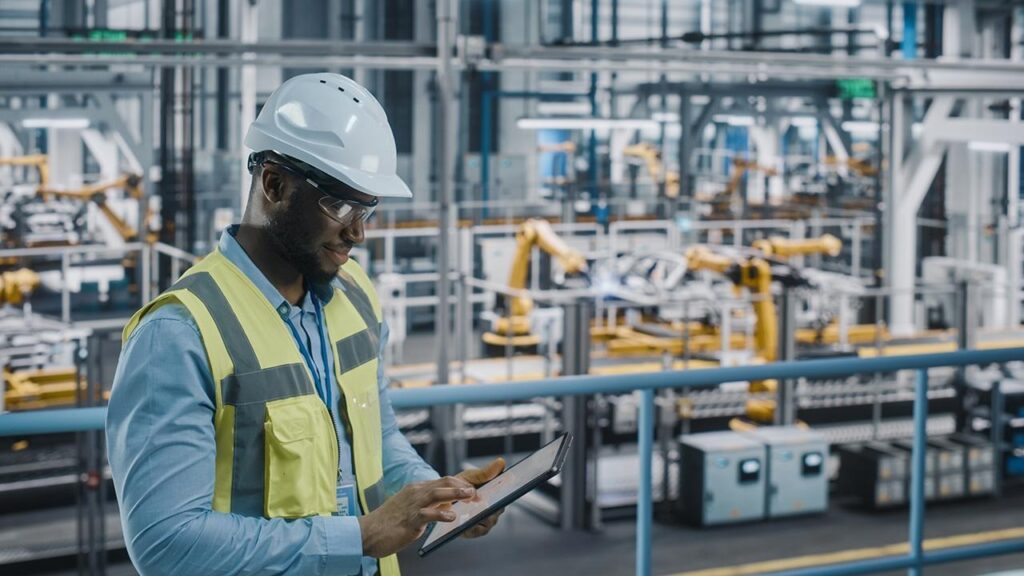
In 2026, the global manufacturing landscape is undergoing a profound transformation. Traditional factories are quickly becoming smart, connected, and date-based places. What was once a competitive advantage has now become a necessity: manufacturers are utilizing advanced technologies such as the Industrial Internet of Things (IIoT), artificial intelligence (AI), robotics, and real-time analytics to significantly enhance production efficiency. These innovations aren’t just ideas for the future-they are already being used in many different industries to cut down on waste, make work processes more efficient, boost productivity, and build stronger, more reliable operations.
What is Smart Manufacturing?
Smart manufacturing refers to the integration of digital technologies into all aspects of the production process. It links machines, people, processes, and systems through advanced software and hardware to build a smart, self‑changing environment that works efficiently. At its core, smart manufacturing focuses on data, collecting it, analyzing it, and using it to drive intelligent decisions in real time.
Key technologies include:
- Industrial IoT (IIoT) sensors and connectivity
- Edge computing and cloud‑based platforms
- Artificial intelligence and machine learning
- Advanced robotics and automation
- Digital twins and virtual simulations
- Real‑time analytics and production monitoring
By enabling seamless communication between equipment and systems, smart manufacturing eliminates silos, enhances flexibility, and creates more transparent and efficient operations.
Driving forces behind Smart Manufacturing in 2026
Several macro trends are accelerating smart manufacturing adoption:
Need for Operational Efficiency
Manufacturers are always trying to make products cheaper, better, and faster. Smart technologies offer real‑time visibility of factory operations, enabling proactive decision‑making and throughput optimization.
Supply Chain Disruption Resilience
Recent years have shown how vulnerable global supply chains can be. Smart manufacturing gives factories the ability to predict bottlenecks, quickly change workflows, and adjust in real time to changes in customer demand.
Skilled Labor Shortages
As experienced workers retire and labor demand grows, companies are increasingly using automation and AI to fill gaps, reduce manual work, and maintain production stability.
Sustainability and Energy Efficiency
Smart systems help reduce waste, conserve energy, and optimize material usage, all critical aspects of today’s environmental standards and regulations.
Key Smart Manufacturing Technologies Transforming Efficiency
Let’s explore the core technologies revolutionizing production efficiency:
Industrial IoT and Sensor Networks
IIoT connects machinery and equipment through sensors that collect real‑time performance data. These sensors monitor variables such as temperature, vibration, throughput, speed, energy usage, and more.
This real-time data enables the following:
- Predictive maintenance to prevent unplanned downtime
- Condition‑based machine adjustments
- Faster detection of quality defects
With IIoT, manufacturers move from reactive to proactive operations.
Artificial Intelligence and Machine Learning
AI and machine learning analyze vast streams of data generated by sensors. This allows systems to identify patterns, predict failures, and optimize production parameters.
Examples of AI use cases:
- Optimizing machine speeds for maximum output with minimal energy
- Predicting quality issues before they occur
- Automatic scheduling and adaptive planning based on real‑time demand
Advanced Robotics and Collaborative Automation
Robots in modern smart factories are no longer isolated behind fences. Collaborative robots (cobots) work safely alongside humans, taking on repetitive, dangerous, or precision‑based tasks.
Benefits include:
- Increased production speed
- Improved product quality and consistency
- Reduced human error
- Safer work environments
When robots and humans function cohesively, throughput and efficiency rise sharply.
Digital Twins and Simulation Environments
A digital twin is a virtual replica of a physical machine, line, or entire factory. Using real‑time data, manufacturers can simulate changes, test configurations, and forecast outcomes without disrupting physical operations.
Digital twins help:
- Reduce setup times
- Optimize layouts
- Predict outcomes of procedural changes
- Train employees virtually
This capability shortens time‑to‑production and reduces costly trial‑and‑error.
Real‑Time Analytics and Dashboards
Modern smart factories rely on dashboards that display key performance indicators (KPIs) in real time — such as Overall Equipment Effectiveness (OEE), cycle times, backlog orders, and downtime events.
With actionable insights at their fingertips, teams can:
- Quickly identify bottlenecks
- Monitor equipment health
- Adjust production schedules dynamically
This transparency empowers continuous improvement.
Real‑World Impacts on Production Efficiency
The shift toward smart manufacturing isn’t theoretical, companies are seeing remarkable results.
Reduced Downtime
Predictive maintenance systems can anticipate when equipment needs servicing, reducing unexpected breakdowns by up to 40–50% in many cases.
Improved Quality Control
Automated inspections powered by cameras and AI catch defects earlier, reducing rework and scrap rates significantly.
Faster Changeovers and Flexibility
Smart planning systems optimize sequence scheduling, leading to shorter changeovers and better responsiveness to customer demand.
Energy and Cost Savings
By monitoring and adjusting energy usage in real time, plants can achieve significant reductions in energy costs and resource waste.
Challenges to Adoption, And How They’re Being Addressed
Despite its advantages, smart manufacturing still presents challenges:
Integration Complexity
Legacy equipment may not be “smart‑ready.” Manufacturers are addressing this through retrofit sensors and gateway systems.
Data Security Concerns
Connecting machines increases cybersecurity risk. Companies are implementing robust network segmentation, encryption, and continuous monitoring.
Skills Gap
Smart factories require new talent in data science, automation, and analytics. Organizations are investing in training programs and collaborative robot workflows that simplify operator interaction.
Upfront Investment
While investment costs can be significant, ROI from reduced downtime, quality improvements, and higher throughput often justifies the expense in under 18 months.
The Road Ahead, What’s Next for Smart Manufacturing
Looking beyond 2026, several developments will further accelerate production efficiency:
- 5G‑enabled factory connectivity for faster real‑time control
- AI‑driven self‑optimizing production lines that automatically reconfigure
- Augmented Reality (AR) for maintenance and training
- Blockchain for secure supply chain traceability
- Sustainability optimization with carbon tracking and closed‑loop recycling
Conclusion
Smart manufacturing is no longer a futuristic ideal, it is the engine driving production efficiency in 2026. By integrating IIoT, AI, robotics, digital twins, and real‑time analytics, manufacturers are breaking traditional limits on speed, quality, and cost. Companies that embrace these technologies are achieving unprecedented levels of productivity, resilience, and competitive advantage.
As smart manufacturing continues to evolve, organizations that prioritize data‑driven operations will lead their industries into a new era of performance and sustainability.
Ready to transform your factory into a smart, data-driven operation? With Meta Smart Factory (MSF), you can seamlessly integrate MES, APS, IoT, and AI to gain real-time visibility, optimize production, and achieve measurable results in just a few months.
Start your smart manufacturing journey today book a free consultation or request a live demo to see how MSF can unlock efficiency, reduce costs, and give you full control over your production.